
What is a push-to-start smart key?
A smart key is a proximity-based fob that stays in your pocket or bag. Your vehicle detects it automatically - just walk up, open the door, and press a button to start the engine. No key blade, no ignition cylinder.
How smart keys work
Smart keys use a short-range radio signal to communicate with your vehicle. When you approach the car with the smart key on you, the vehicle's sensors detect the fob's signal and automatically unlock the doors. Once you're inside, you press the start button on the dash and the engine starts - no inserting anything, no turning anything.
The system works through a series of antennas built into the vehicle. The car is constantly sending out a low-power signal, and when the smart key comes within range, the two devices complete a handshake. The car verifies the key's identity, confirms it's authorized, and grants access.
This is different from a traditional transponder key or a fobik. With a transponder key, you insert the blade and turn the ignition. With a fobik, you plug it into a dash slot. With a smart key, the fob never leaves your pocket. The vehicle does the work.
Smart keys have become increasingly common across nearly all manufacturers, from economy cars to luxury vehicles. If your car has a push button on the dash instead of a traditional ignition cylinder, you're using a smart key system.

How to tell if you have a smart key
No key blade visible
Smart keys are typically fob-shaped - a small rectangular or rounded device with buttons on the face. There's no visible metal blade sticking out.
Push-to-start button
If your vehicle has a button on the dashboard or center console labeled "Engine Start/Stop" instead of a traditional ignition cylinder, you're using a smart key system.
Keyless entry
If you can walk up to your car and open the door without pressing any buttons on the fob, your car uses proximity-based keyless entry - which means you have a smart key.
Hidden emergency blade
Check the back or side of the fob for a small release switch or sliding tab. It should reveal a thin metal key blade used for manual door entry only.
Common vehicles that use smart keys
Toyota Camry, Honda Accord, Honda Civic, Nissan Altima, Ford F-150, Chevy Malibu, Hyundai Tucson, Kia Sportage, Jeep Grand Cherokee (newer models), BMW, Mercedes-Benz, Lexus, and many others.
Replacing or programming a smart key
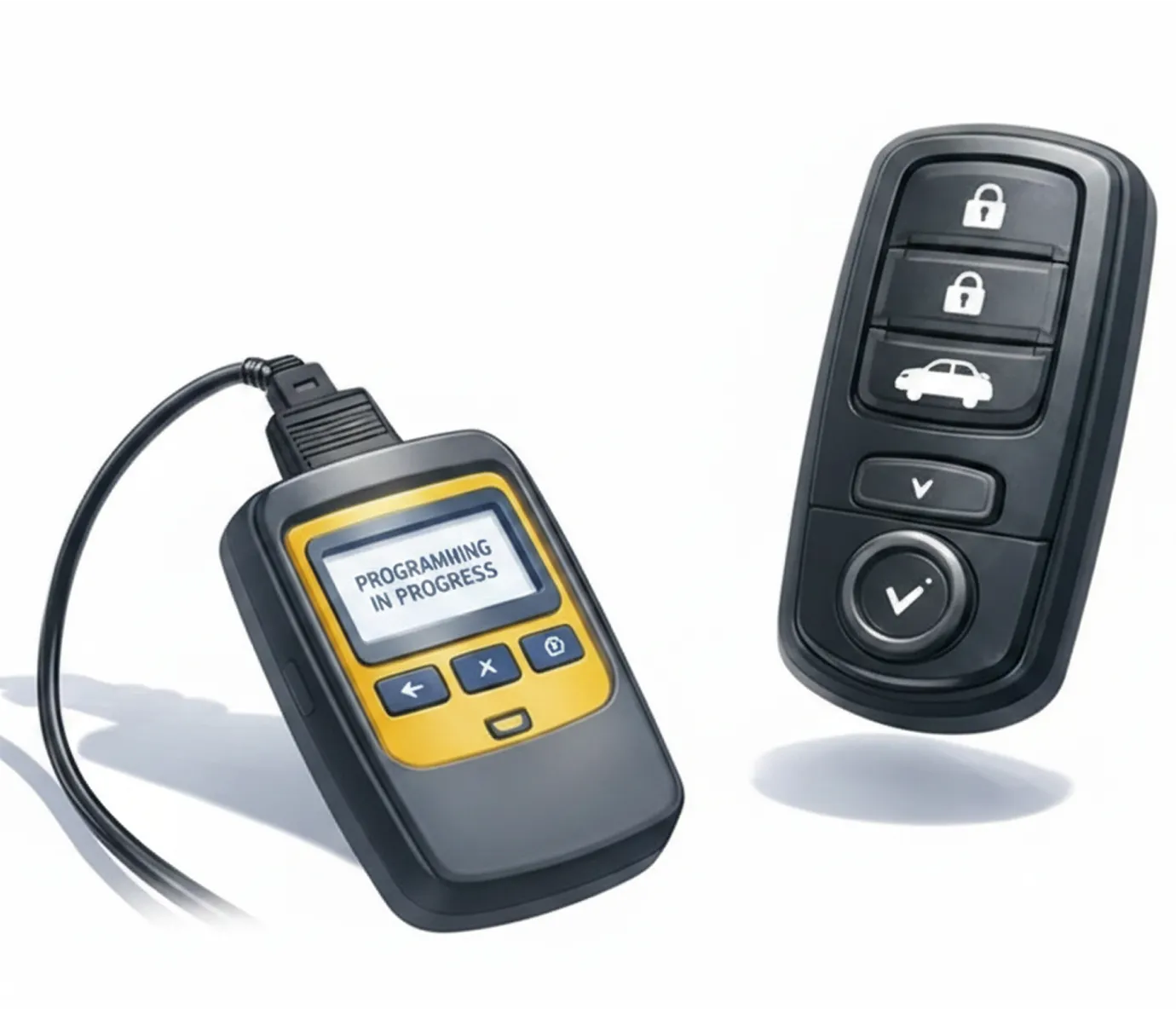
Smart keys are the most technologically complex key type on the road. Replacing one requires specialized diagnostic equipment to pair the new fob with your vehicle's onboard computer. Without proper programming, the car won't detect the key and the engine won't start.
This is not something a hardware store, key kiosk, or general locksmith can handle. And the dealership can do it - but you already know what that means: scheduling, towing, and paying the dealer markup.
Knox Car Keys carries the professional diagnostic equipment to program smart keys on-site. We come to your location, pair the new fob with your vehicle's system, verify proximity detection and push-to-start functionality, and test everything before we leave. No tow, no dealer, no wait.
Need a key programmed? We'll come to you.
Need a key programmed? We'll come to you. Skip the dealer. Skip the guesswork. Call Knox Car Keys and we'll handle the programming on-site.
Call Us Directly

Operation Hours
Monday - Friday : 8am - 6pm
Saturday : 8am - 3pm
Sunday : By appointment only