
What is a transponder key?
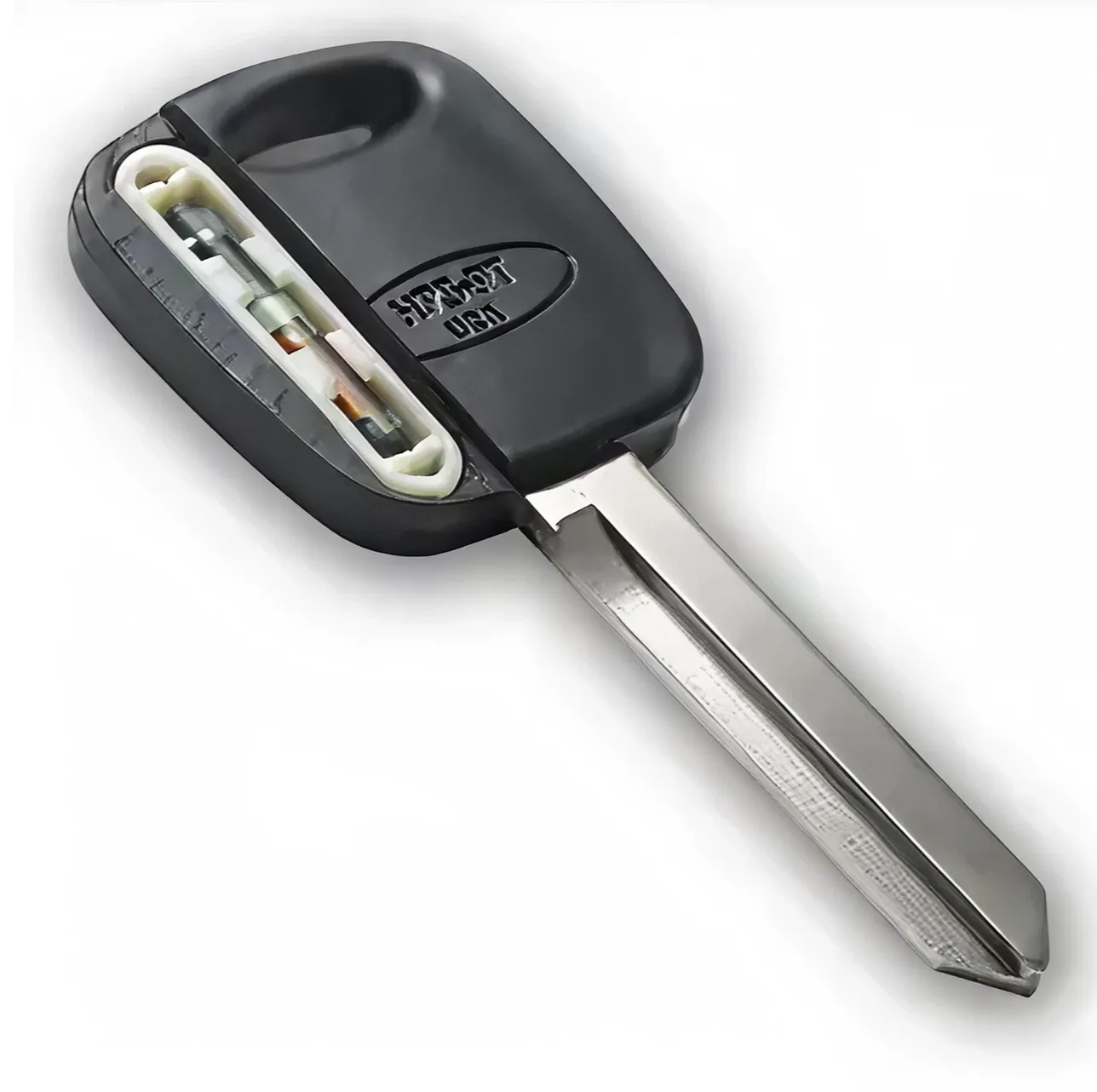
A transponder key looks like a regular car key, but there's a small electronic chip hidden inside the plastic head. That chip is what allows your car to start - and without it, the engine stays locked.
How transponder keys work
Every transponder key contains a tiny microchip embedded in the head of the key. When you insert the key into the ignition and turn it, the chip sends a unique coded signal to your vehicle's immobilizer system. The immobilizer checks whether the signal matches what it expects. If it does, the engine starts. If it doesn't, the engine stays locked - even if the key blade is cut perfectly.
This system was designed to prevent car theft. A standard metal key copy can turn the ignition, but without the right chip sending the right code, the car won't start. It's an effective security feature, but it also means that replacing or duplicating a transponder key requires more than just cutting a blade. The chip has to be programmed to match your specific vehicle.
Transponder keys became standard on most vehicles starting in the mid-1990s. If your car was built after that, there's a good chance it uses some version of this system.
How to tell if you have a transponder key
Look at the key head
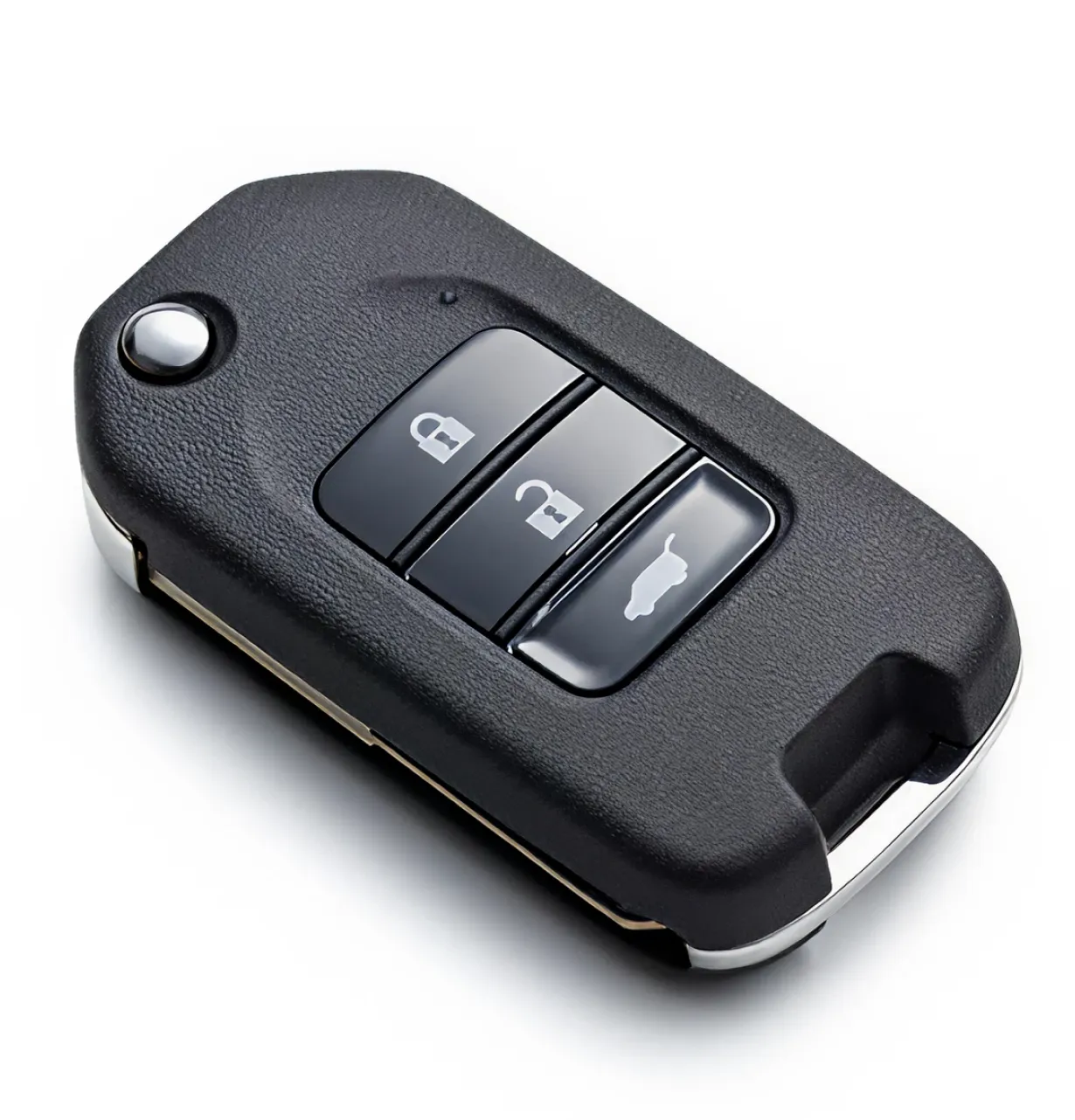
Transponder keys have a thicker plastic head compared to a traditional all-metal car key. The chip is housed inside that plastic casing.
No buttons on the key itself
A basic transponder key doesn't have lock/unlock buttons - it's just a key with a thick head. Some vehicles combine a transponder chip with a head key that does have buttons, function is separate from the remote.
Check the key blade
Transponder keys can have either a standard edge-cut blade or a laser-cut (sidewinder) blade depending on the vehicle. Both types can contain a transponder chip.
Common vehicles that use transponder keys
Ford, Chevy, GMC, Honda, Toyota, Nissan, Hyundai, Kia, Subaru, Mazda, and many others. Most non-luxury vehicles built after the mid-1990s use a transponder key system.
Replacing or programming a transponder key
Transponder keys can't be duplicated at a hardware store. The blade can be cut, but the chip won't be programmed - which means the key won't start the car.
Replacing or duplicating a transponder key requires two things: precision cutting of the key blade and programming of the chip to communicate with your vehicle's immobilizer. Both steps need to be done with professional equipment.
Knox Car Keys handles both on-site. We come to your location with the cutting equipment and diagnostic tools to cut the blade, program the chip, sync it with your vehicle, and test it before we leave. No tow, no dealer appointment, no waiting.
What is a fobik key?
A fobik key combines a remote and an ignition key into a single unit that plugs directly into a slot on your dashboard. No traditional key blade, no turning the ignition - just insert the fobik and press the brake to start.
How fobik keys work
FOBIK stands for Frequency Operated Button Integrated Key. It's a combination device that handles two jobs at once: it acts as your keyless entry remote (lock, unlock, trunk, panic) and as your ignition key.
Instead of inserting a metal blade into a traditional ignition cylinder, you slide the fobik into a slot on the dashboard or steering column. The vehicle reads the fobik's electronic signal, verifies it's authorized, and allows the engine to start when you press the brake pedal.
Fobik keys are most commonly found on Chrysler, Dodge, and Jeep vehicles, though the specific design varies by model and year. They became widely used starting in the mid-2000s as manufacturers moved away from traditional key-and-cylinder ignition systems.
Most fobik keys also contain a small hidden emergency key - a thin metal blade tucked inside the fob casing. This emergency key can manually unlock the driver's door if the fobik's battery dies, but it won't start the vehicle.
How to tell if you have a fobik key
Shape
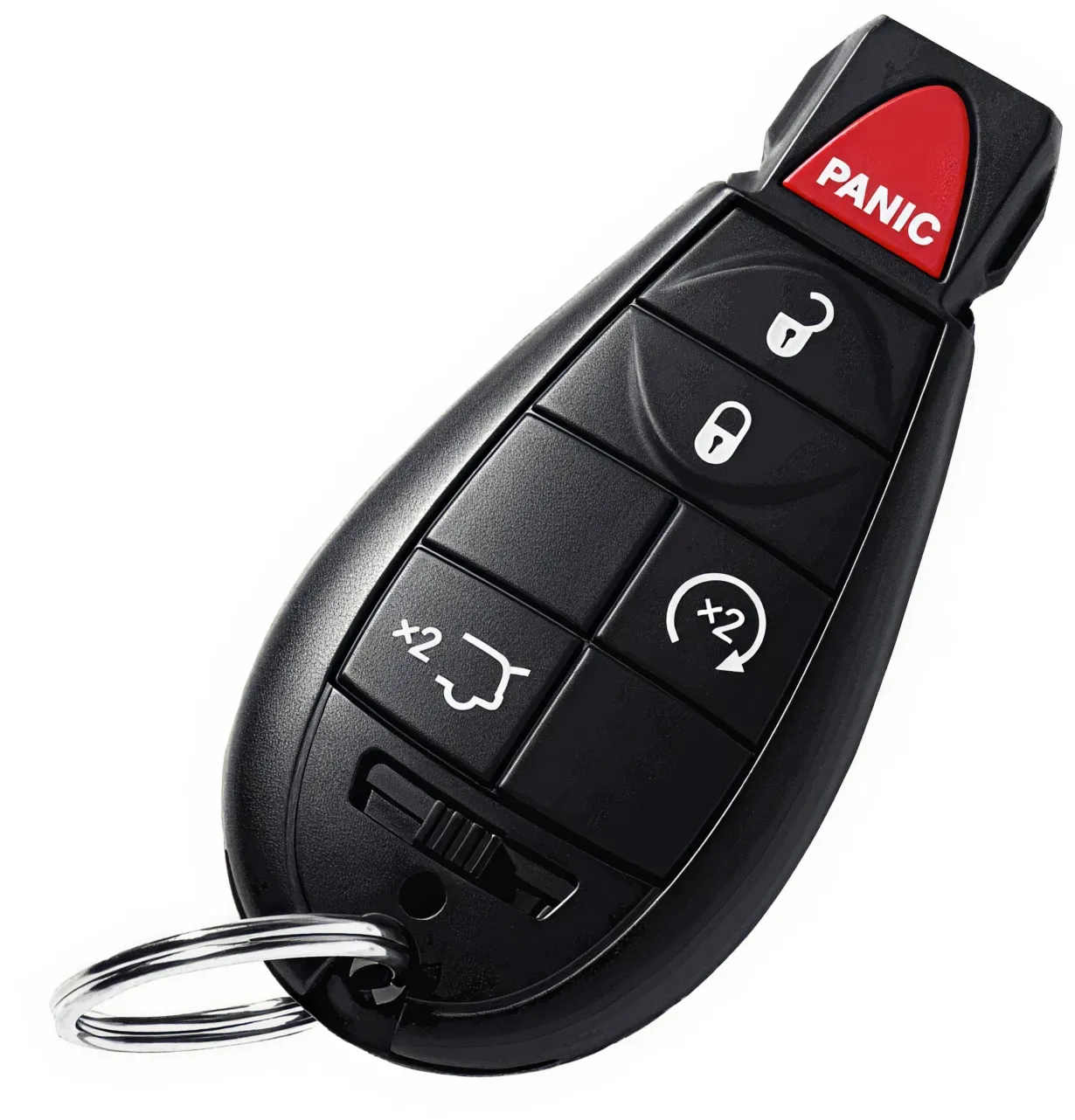
A fobik looks like a chunky remote fob with a flat, rectangular plug on one end. It doesn't have a traditional key blade sticking out.
Dash slot instead of ignition cylinder
If your vehicle has a slot on the dashboard or steering column where you insert the fob to start the car, you're using a fobik system.
Buttons on the front
Fobik keys typically have lock, unlock, and trunk/hatch buttons on the face of the fob. Some models include a remote start or panic button as well.
Hidden emergency key
Check the back or side of the fob for a small release button or latch. Sliding or pressing it should reveal a thin metal emergency key blade.
Common vehicles that use fobik keys
Chrysler 300, Dodge Charger, Dodge Challenger, Dodge Durango, Dodge Ram (select years), Jeep Grand Cherokee, Jeep Commander, Jeep Liberty, and other Chrysler/Dodge/Jeep models from the mid-2000s.
Replacing or programming a fobik key
Transponder keys can't be duplicated at a hardware store. The blade can be cut, but the chip won't be programmed - which means the key won't start the car.
Replacing or duplicating a transponder key requires two things: precision cutting of the key blade and programming of the chip to communicate with your vehicle's immobilizer. Both steps need to be done with professional equipment.
Knox Car Keys handles both on-site. We come to your location with the cutting equipment and diagnostic tools to cut the blade, program the chip, sync it with your vehicle, and test it before we leave. No tow, no dealer appointment, no waiting.
Need a key programmed? We'll come to you.
Need a key programmed? We'll come to you. Skip the dealer. Skip the guesswork. Call Knox Car Keys and we'll handle the programming on-site.
Call Us Directly

Operation Hours
Monday - Friday : 8am - 6pm
Saturday : 8am - 3pm
Sunday : By appointment only